
Ceiling Stains Over Production Lines
Brown rings on ceiling tile mark where water finally dropped, while the opening sits somewhere upslope along a seam, curb, or deck flute. We trace that path on the roof before cutting any patch.
As a York commercial roof repair contractor, we trace leaks, repair flat and metal roofs, and rebuild damaged sections on plants, warehouses, and shops across York, PA.
Most York commercial roof repair calls start with one of these six conditions, seen from inside the building or on a roof walk.
Brown rings on ceiling tile mark where water finally dropped, while the opening sits somewhere upslope along a seam, curb, or deck flute. We trace that path on the roof before cutting any patch.
Lap seams that have lost their bond lift at the edges and let water travel under the membrane. On older single-ply and built-up roofs we probe each seam near the leak and repair the run that let go.
Rings of dirt around a roof drain show where water sits for days after rain. The cause can be a lifted drain ring, crushed insulation, or a low deck area, and each one needs a different repair.
Metal shop roofs rust first at panel ends, eave laps, and around fasteners. Where the steel underneath is still firm, we cut back the weak metal and rebuild the end detail instead of replacing the whole roof.
Curbs under exhaust fans and HVAC units carry vibration, condensate, and service traffic. Cracked flashing, open corners, and loose counterflashing at those curbs cause many of the leaks we trace on plant roofs.
A puncture the size of a coin can soak insulation several feet around it. Core cuts tell us how far the moisture spread, which decides whether a patch holds or the section has to be rebuilt.
Four repair services cover the roofs we see most around York, PA: flat membranes, metal panels, hidden leaks, and plant roofs with heavy equipment.
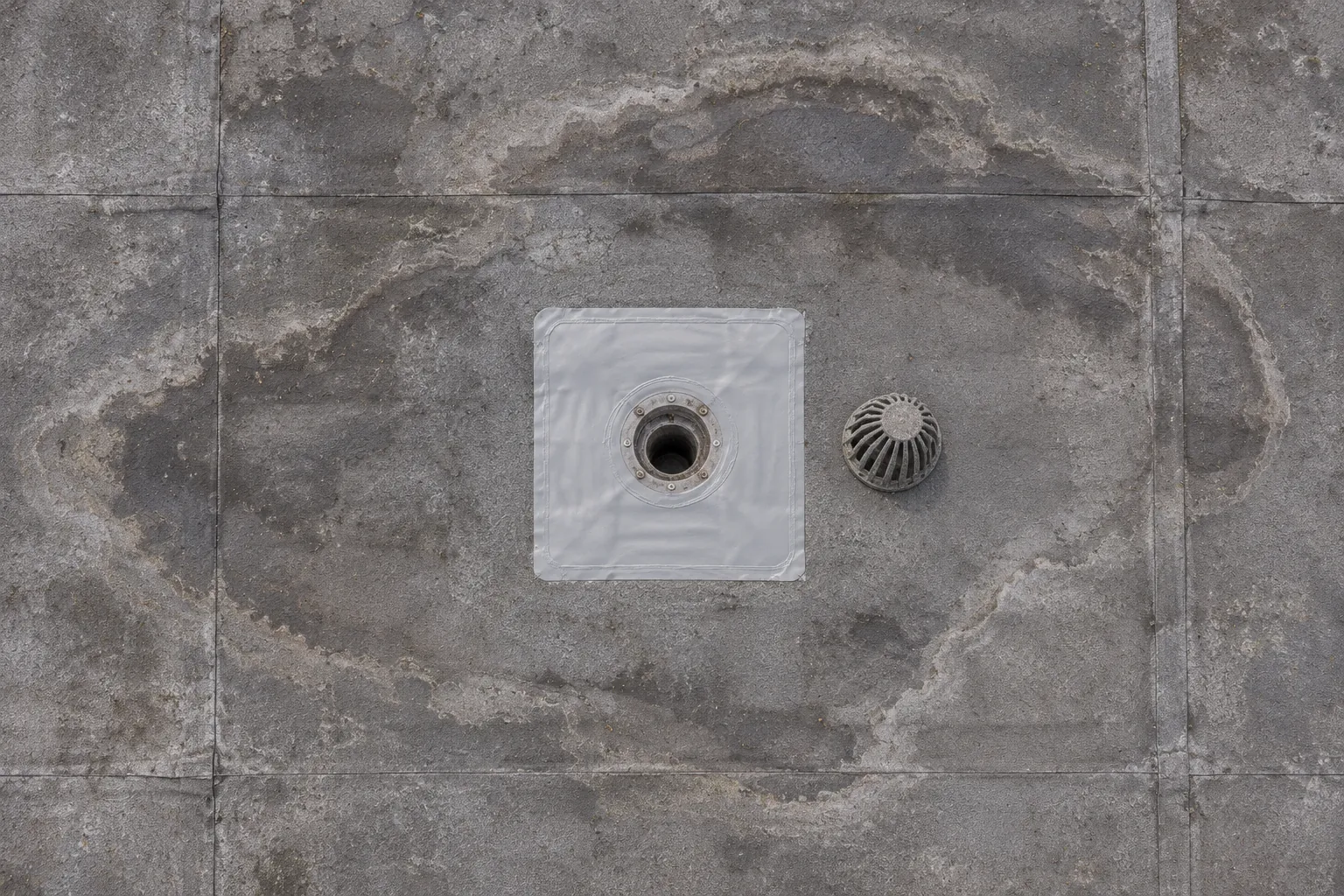
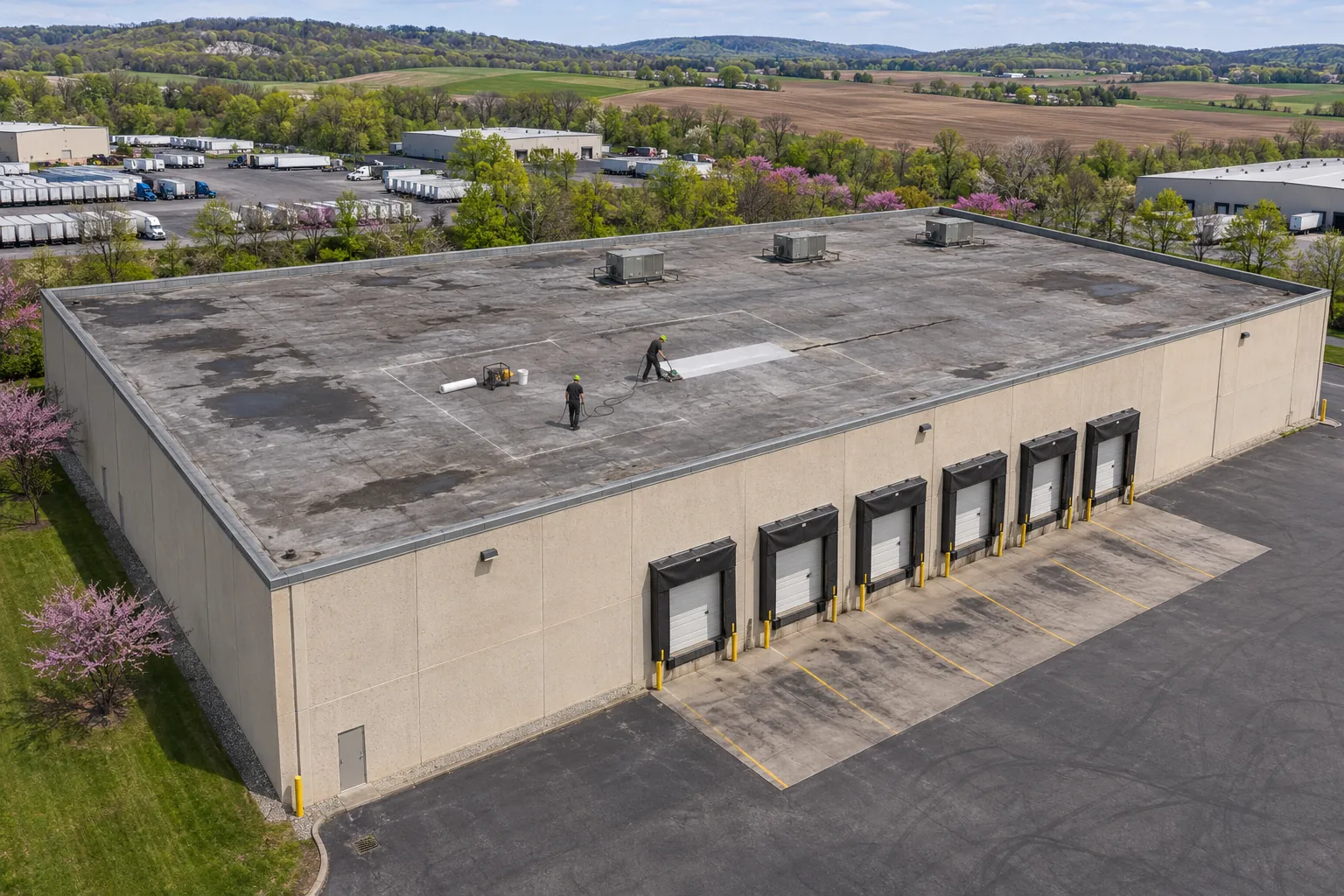
Low-slope membrane and built-up roofs on warehouses and plants, where seams, drains, and blisters have started letting water in and the insulation underneath needs checking before any patch goes on.
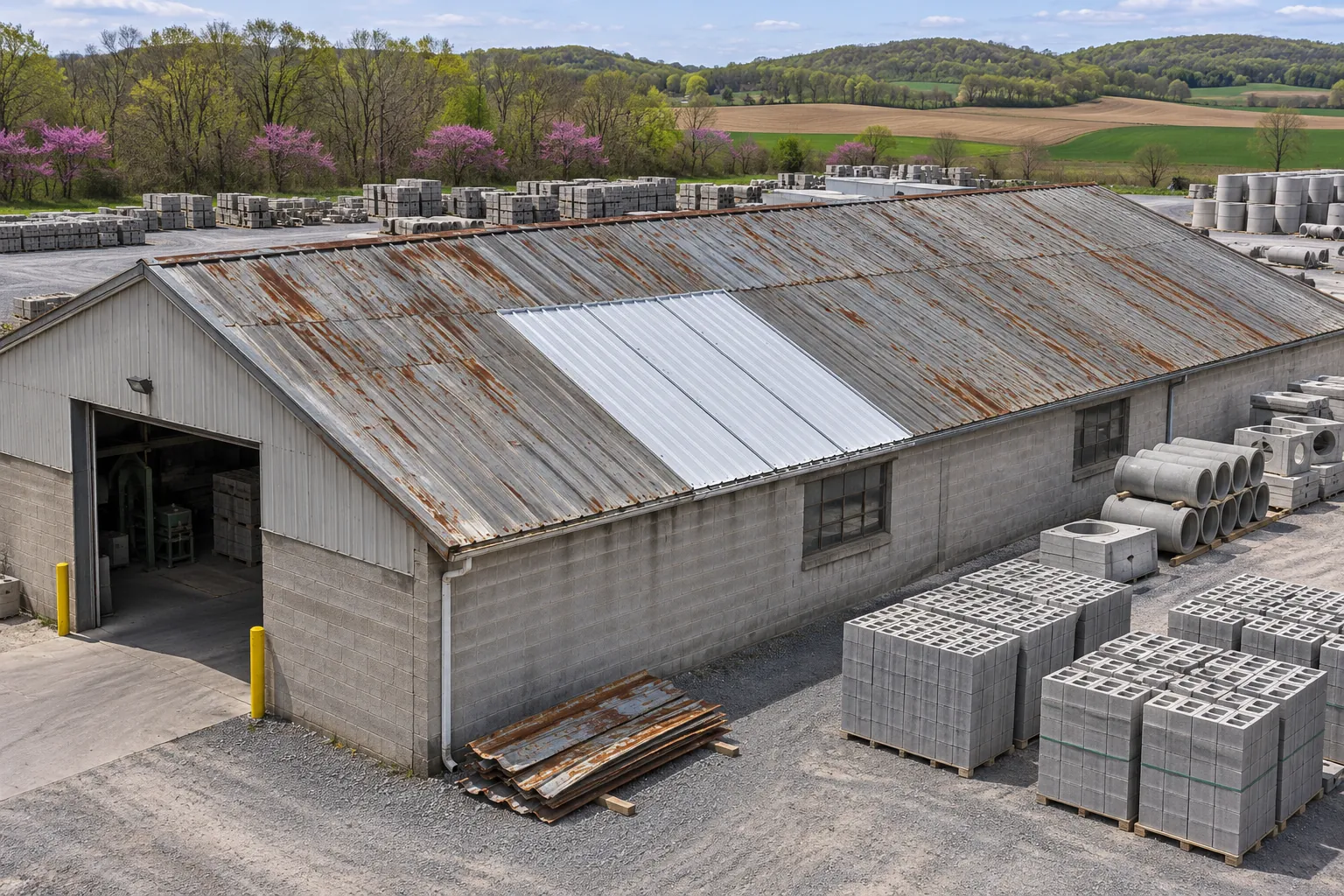
Ribbed and standing-seam roofs on shops, block plants, and storage buildings, where rusted panel ends, loose fasteners, or split laps let water in along the panel runs.
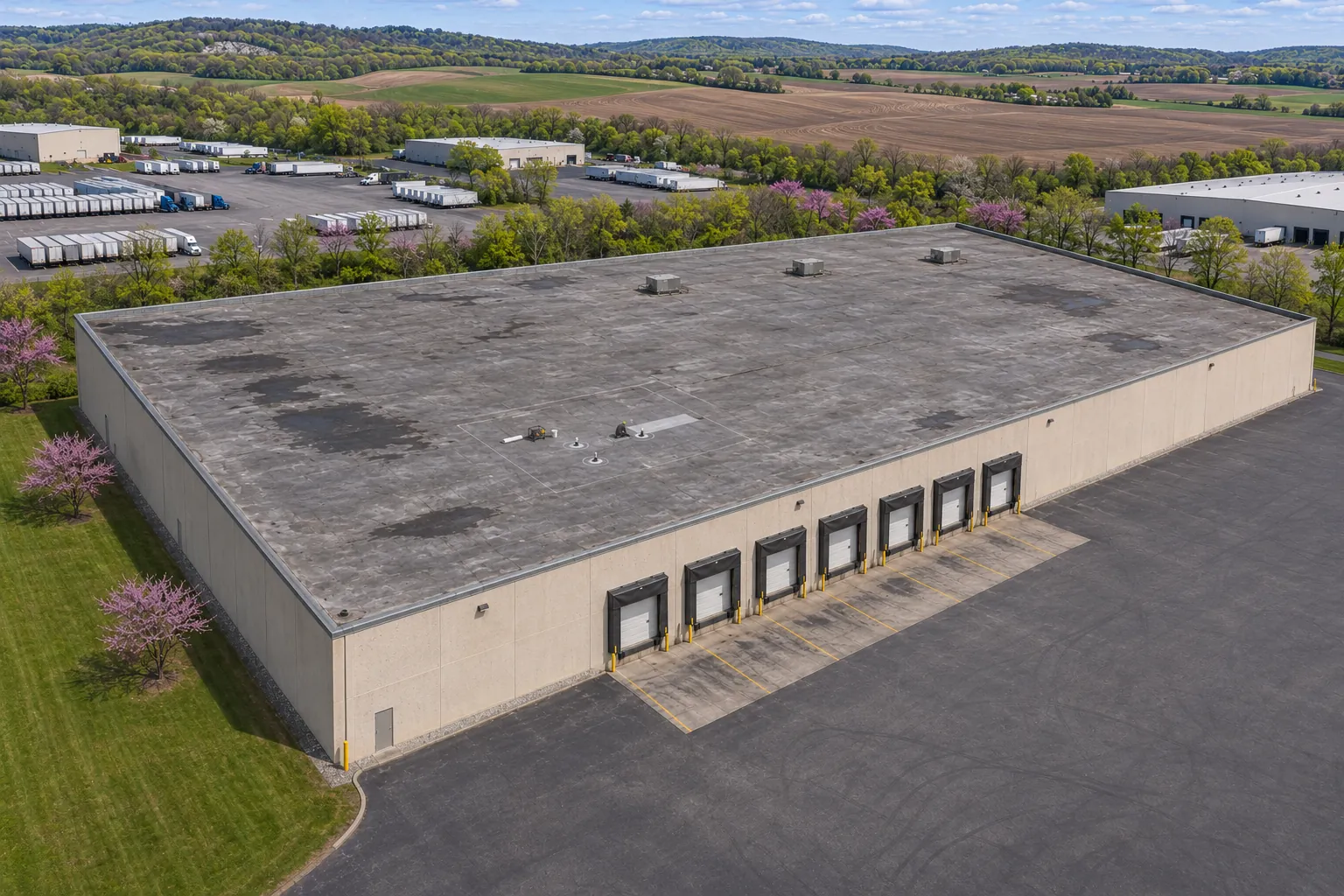
Leaks that show up inside before anyone finds the opening on the roof, including drips at curbs, walls, and skylights and spots that only leak with snowmelt or equipment running.
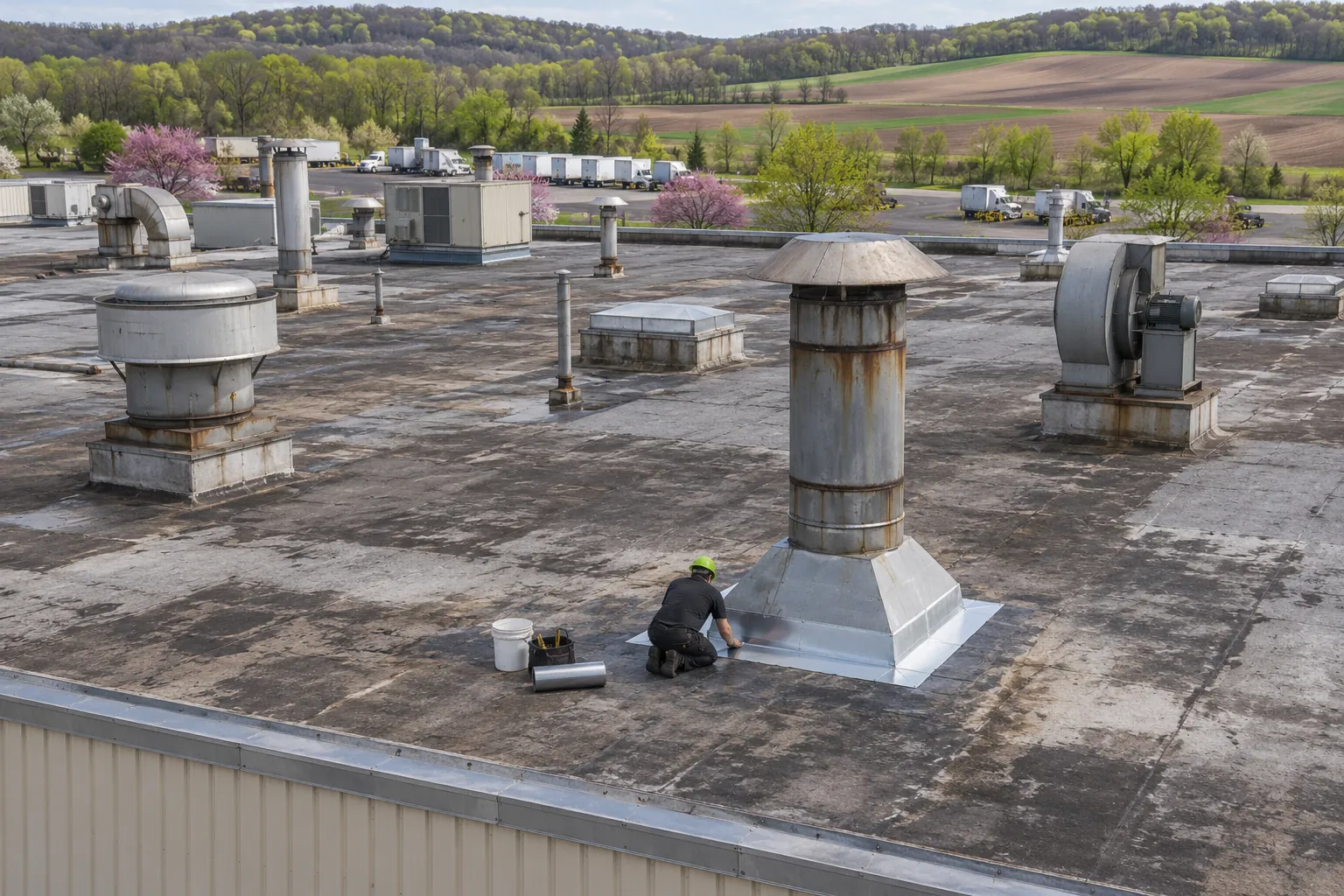
Plant roofs crowded with exhaust stacks, ductwork, and fans, where service traffic, process deposits, and vibration wear down flashing and membrane faster than on an ordinary warehouse roof.
Call us with where the water is landing and what sits above that spot on the roof. We will talk through protecting the area and getting the roof looked at.
Read across from the condition you see to the job it usually leads to. The positions are general, and the inspection settles your roof.
| What You See | Spot Repair | Section Rebuild | Wider Replacement |
|---|---|---|---|
| One open seam over dry insulation | Usually Fits | Rarely | Rarely |
| A blister field around a single drain | Sometimes | Usually Fits | Rarely |
| Rust confined to a few panel ends | Usually Fits | Sometimes | Rarely |
| Repeated leaks at one exhaust curb | Usually Fits | Sometimes | Rarely |
| Wet insulation in core cuts across the roof | Rarely | Sometimes | Usually Fits |
| Patches layered over patches on most of the roof | Rarely | Sometimes | Usually Fits |
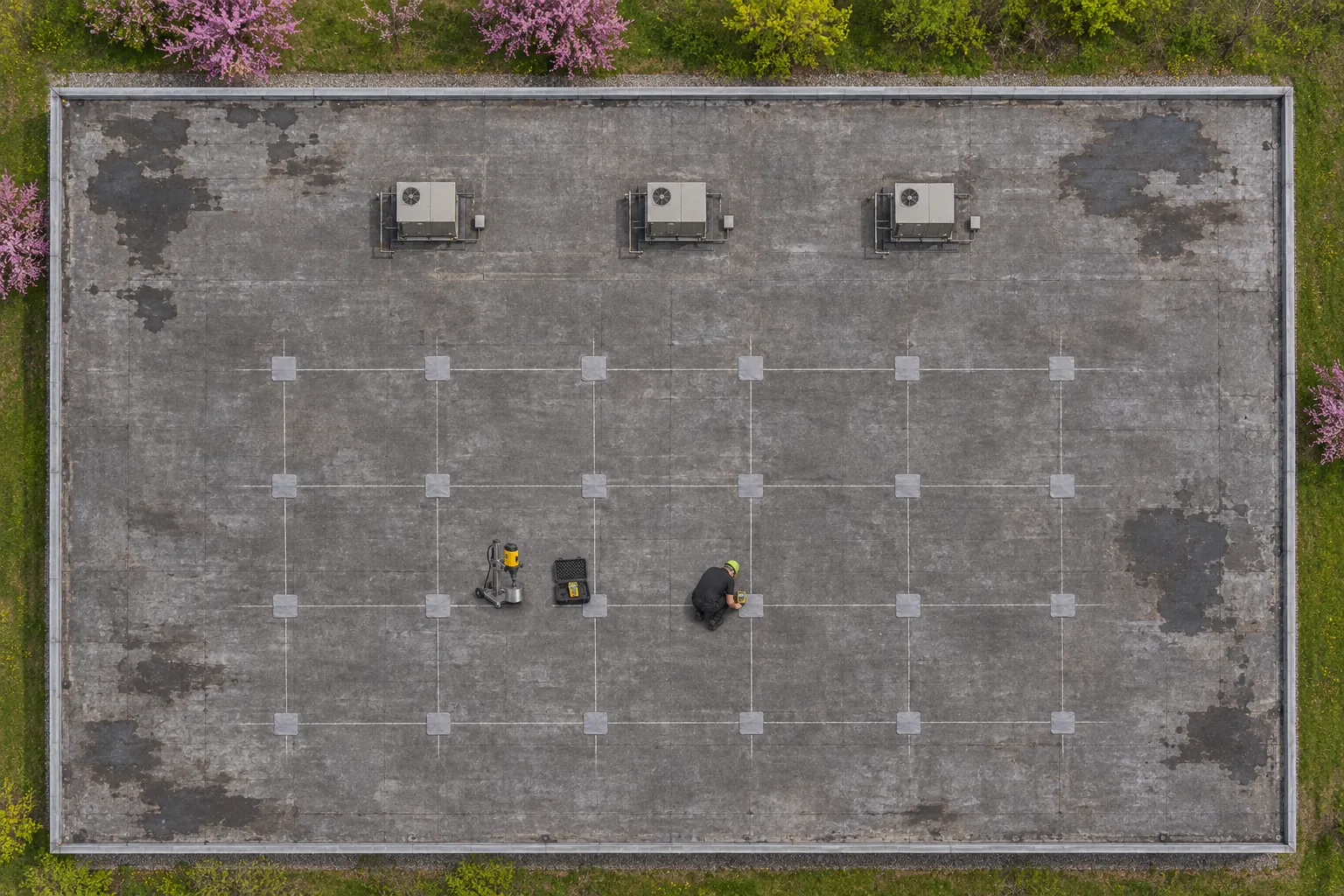
A repair scoped from inspection findings protects more than the wet spot. These are the gains owners see when the work follows the damage map.
Removing only the wet boards around a defect keeps the rest of the roof's insulation working and stops moisture from spreading under the membrane after the next storm.
Work on one bay at a time, with interior protection planned ahead, lets machinery and packing lines keep operating beneath most of the roof.
Photos, core-cut results, and a marked roof plan give you a record to compare against later leaks, a lease discussion, or a replacement budget.
Fixing the cause at a curb or drain, such as movement, slope, or a failed flashing detail, ends the cycle of new caulk over old caulk.
Each visit follows the same order, so the price you see is tied to what was found on the roof.
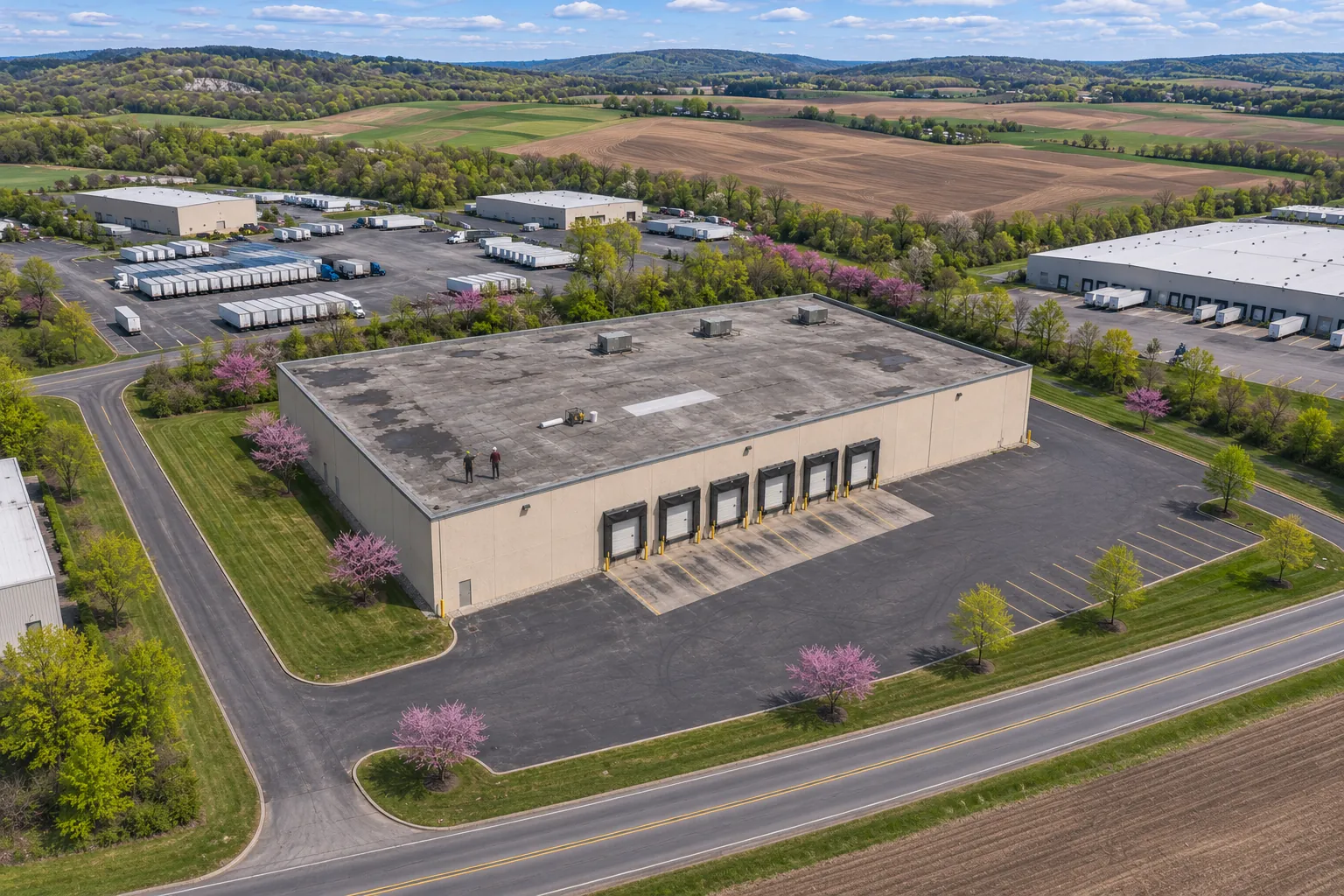
We ask where water shows inside, when it started, what weather or equipment work came before it, and how the roof is reached. Those answers decide where the roof walk begins.
Seams, curbs, drains, edges, and penetrations near the reported area get checked by hand, and water paths are followed upslope from the interior marks.
If the insulation might be wet, small core cuts show how far moisture reaches. Each core is sealed before we leave the roof.
You receive photos, a marked plan, and a price built from tracing, damage size and count, core results, flashing and drain work, and access.
Damaged material comes out, the connection to solid roofing is rebuilt, and the finished seams and flashings are checked before the area is handed back.
We take commercial roof repair work in York and five towns nearby. Outside them? Call us or send us a message.
| Town | County | What We See On Roofs There |
|---|---|---|
| YorkHome Base | York County | Machinery plants, snack food plants, and warehouses with flat membrane roofs and plenty of rooftop equipment. |
| Hanover | York County | Machinery and equipment shops where leaks often show above overhead door tracks. |
| Elizabethtown | Lancaster County | Food plants with exhaust equipment that gets serviced on the roof. |
| Red Lion | York County | Older commercial roofs carrying unused antenna mounts and other leftover penetrations. |
| Steelton | Dauphin County | Plant roofs where owners weigh competing repair boundaries. |
| Oxford | Chester County | Equipment businesses finishing interior repairs after a roof leak. |
Short answers to the questions York plant and shop owners ask before a repair.
Patching stops making sense when new patches have nothing solid to bond to, or when core cuts and a roof walk show moisture and deterioration across large areas. We lay the damage map beside the roof's repair history and mark which sections still serve. That comparison, more than roof age or call count, should drive the choice.
That depends on the lease and on what the owner and tenant agreed. Both parties should read the agreement and settle who approves the scope before work begins. We supply the roof findings, photos, and proposed repair so that conversation has facts behind it, and we keep our repair recommendation separate from any reading of who is responsible.
Often, yes. A damaged bay can be rebuilt on its own when its edges, drainage, and supporting assembly allow solid tie-ins to the bays beside it. We check for moisture past the visible damage and plan protection for the occupied space below. The repair edge follows conditions on the roof, which may not match the room where the leak showed.
A useful commercial roof inspection shows the likely entry points, how far the damage reaches, and whether the surrounding materials can carry a repair. We record seams, penetrations, drainage, and any moisture found under the membrane. With that record you can weigh a local fix against broader work using the roof as it really is.
Yes. Water that gets into a weak repair edge freezes, expands, and pries the joint wider each cycle, especially where the original adhesion was poor. We look at the edge and the material around it to learn why it opened. Another layer over a stressed edge tends to trap the problem, so the fix targets the original defect.
Protect the affected interior first through your own operating procedures, then arrange an assessment of roof access and condition. Heavy wet snow hides defects and can raise structural questions that come ahead of any repair. We never judge load capacity from the roof covering, and visible sagging or distress needs proper evaluation before anyone walks onto that area.
Tell us where the water shows and what kind of roof is overhead. We will set up an inspection and price the repair from what we find.